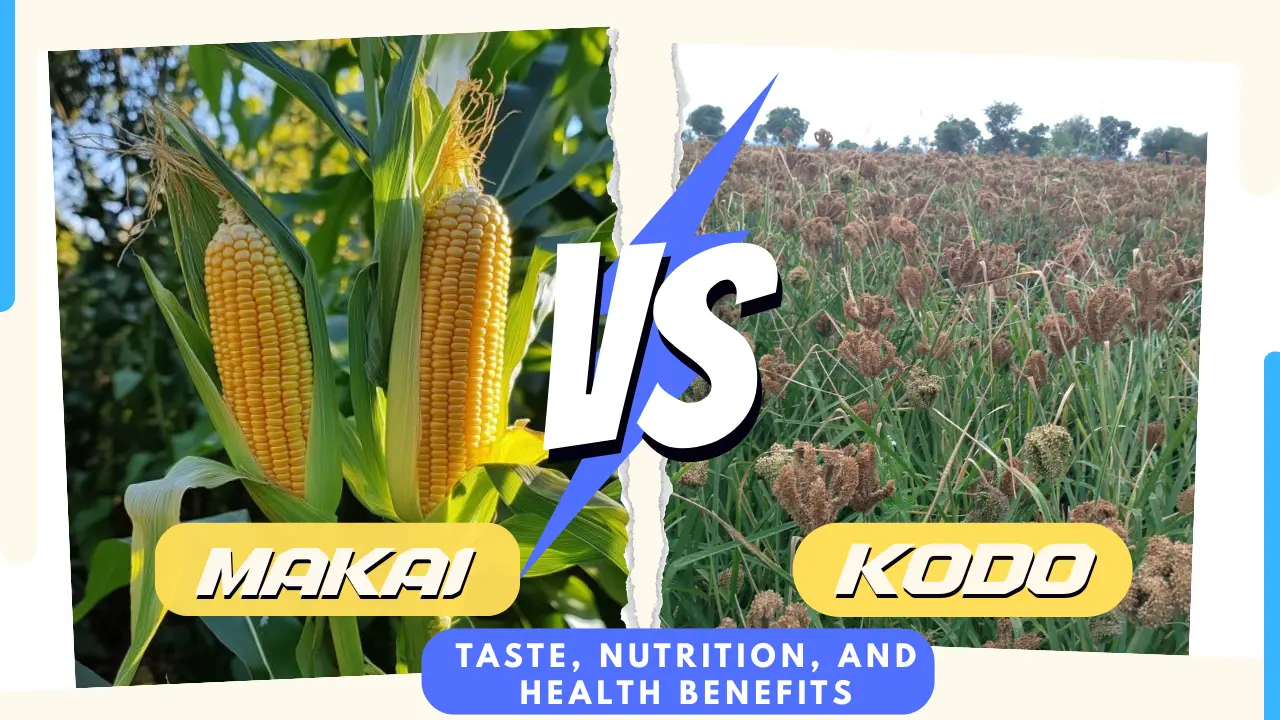
When it comes to healthy food and snacking in Nepal, Makai (corn) and Kodo (finger millet) are two grains that often come to mind. Both are nutritious, locally grown, and versatile, but which is better for taste, nutrition, and overall health? Let's break it.
Makai (corn)
Naturally sweet and walnut-tasting.
Versatile-bolt, boiled, or ground in flour.
All age groups loved the familiar taste.
Kodo (Finger Millet)
Earthy, with a walnut-like taste and a dense texture.
A little bitter than corn, but filling and hearty.
Best enjoyed in traditional forms, such as Dhido or Roti.
Nutrition Breakdown: Makai vs Kodo in Nepal
|
Nutrient (per 100 gm, raw) |
Makai (Corn) |
Kodo (Finger Millet) |
|
Calories |
365 kcal |
336 kcal |
|
Carbohydrates |
74 g |
72 g |
|
Protein |
9 g |
7.3 g |
|
Fat |
4.7 g |
1.3 g |
|
Dietary Fiber |
7 g |
3.6 g |
|
Calcium |
7 mg |
344 mg |
|
Iron |
2.7 mg |
3.9 mg |
Taste:
Makai is known for its naturally sweet, naturally aromatic products that immediately appeal to the taste buds. Its light, versatile taste makes it pleasant in many forms, whether roasted, boiled, or ground into flour.
Corn often carries a light butter note that adds comfort and familiarity, making it a favorite for snacks, street foods, and even ripe items. The sweetness of Makai gives it a universal appeal, especially for those who enjoy a light, crisp, and delicious bite.
Nutrition:
Makai, or corn, is mainly a source of carbohydrates, which provide quick energy for daily activities. It contains moderate amounts of protein and dietary fiber, which help to some extent to support digestion and satisfaction.
Corn is also rich in essential B-complex vitamins, especially thiamine and folate, which play an important role in energy metabolism and overall health.
Health Benefits:
Makai, or corn, is a versatile grain that provides quick energy and essential nutrients to support overall health. It contains B-complex vitamins, such as thiamine and folate, which support metabolism, and antioxidants, such as lutein and zeaxanthin, which are beneficial for eye health.
Its medium fiber content helps maintain healthy digestion, and regular consumption can contribute to heart health and stable energy levels throughout the day.
Final Thought
Both Makai and Kodo in Nepal are incredible grains that bring unique taste, nutrition, and health benefits to the table. If you are looking for quick energy and a sweet, versatile taste, then Makai (Corn) is a great option.
But if you want a nutrient-dense, high-fiber, and mineral-rich option, the Kodo finger millet clearly stands out as a healthy grain. Instead of choosing one over the other, you can include both corn and Kodo in your daily diet.
FAQs
Which is healthy, Makai or Kodo?
Kodo is usually considered healthy because it is high in fiber, protein, and minerals. However, corn is a great source of quick energy.
Can diabetic patients eat Makai and Kodo?
Codo is a better option for diabetic patients due to its low glycemic index. Corn can be eaten in moderation, but should not be consumed more.
Yes, both are naturally gluten-free, which makes them suitable for people with gluten intolerance or celiac disease.
Are Makai and Kodo gluten-free?
Yes, both are naturally gluten-free, which makes them suitable for people with gluten intolerance or celiac disease.
Which is better for weight loss, Makai or Kodo?
Codo is better for weight loss because it keeps you full for a long time and provides slow-release energy.
Can I eat both Makai and Kodo daily?
Yes! Including both in your daily diet gives you variety, taste, and a mix of quick energy and long-term health benefits.


.png)
.png)




.webp)


.png)
.png)

.png)